
Cold Creek Pigging Simulator · Browser
Find out what the line does before it does it to you.
A pigging simulator for natural gas gathering lines. Pad to pad, home run to the compressor station, station to the plant. Watch liquids collect in the low spots and compare simulated runs with different inputs.
For evaluation and practice. Not a working tool. Try it, learn from it, judge whether it is worth having. Do not run a job off it. Pressure figures are simplified estimates, the physics is illustrative rather than calibrated, and nothing it exports is a record. The supplemental terms say so in more detail, and they mean it.
The part that is hard to teach
Pigging is mostly uneventful until it is not, and the day it is not is a bad day to be learning. A pig that will not move is a judgment call made under pressure, with a control room on the phone, and the wrong sequence hurts people.
You cannot practice that on a live line. This is somewhere to make the call, watch what happens, and make it again.
In the simulator
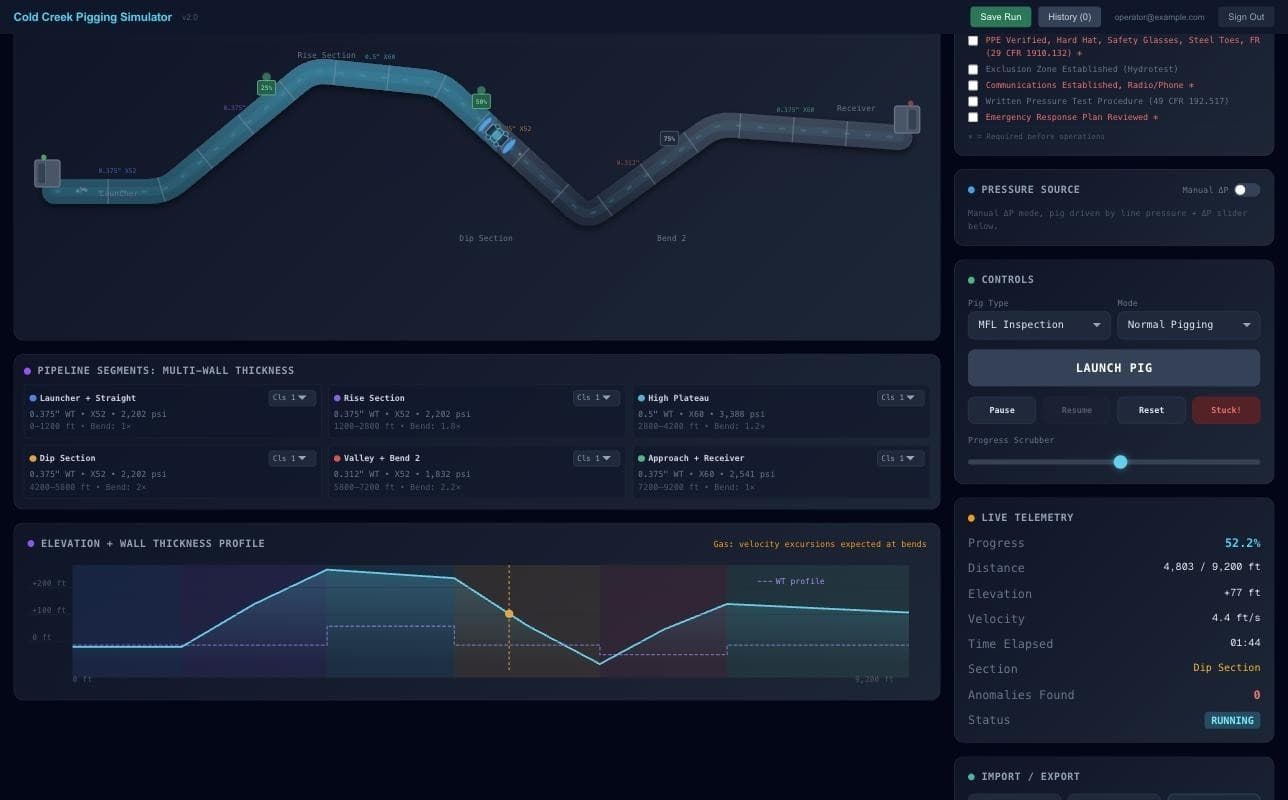
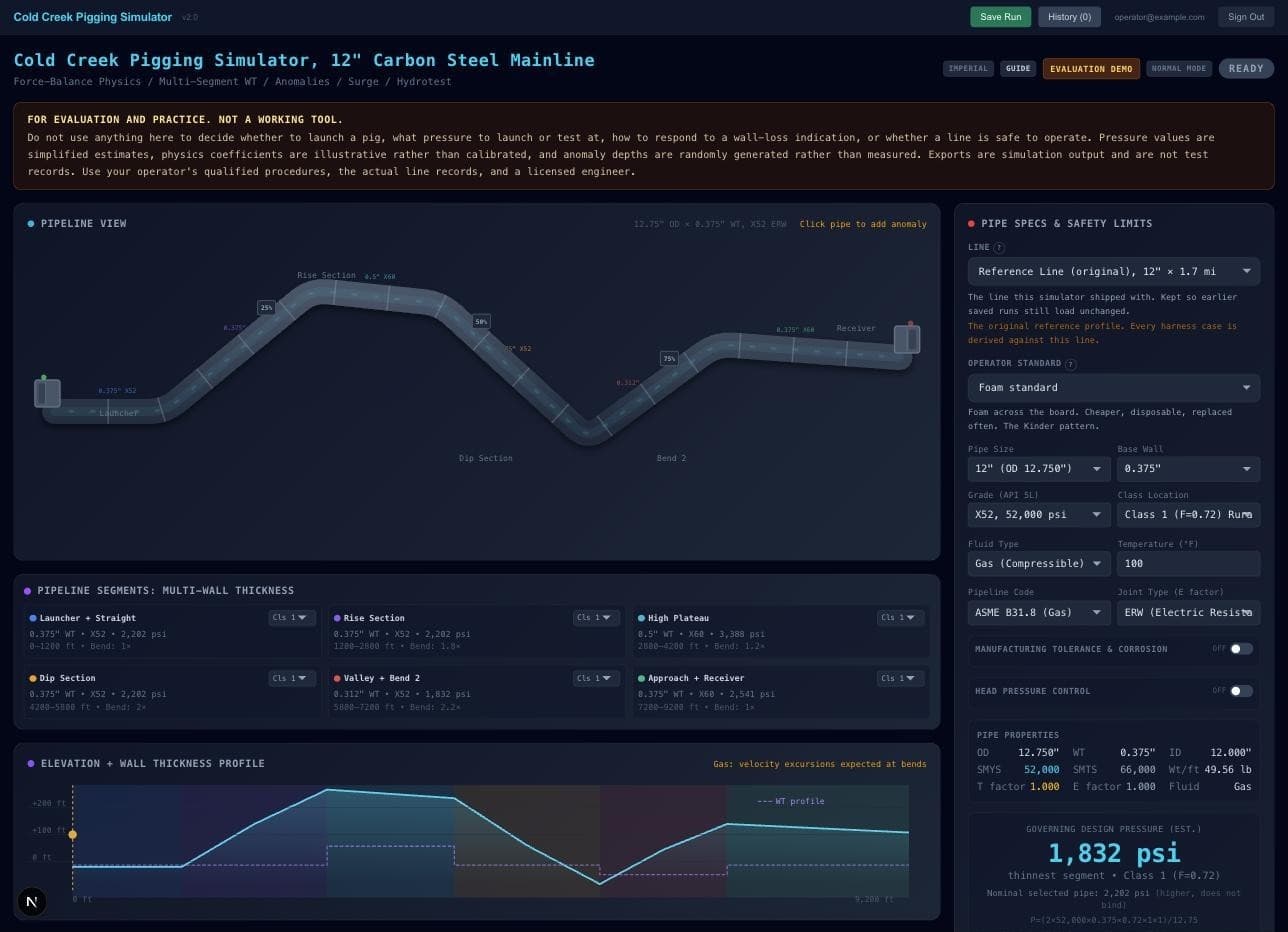
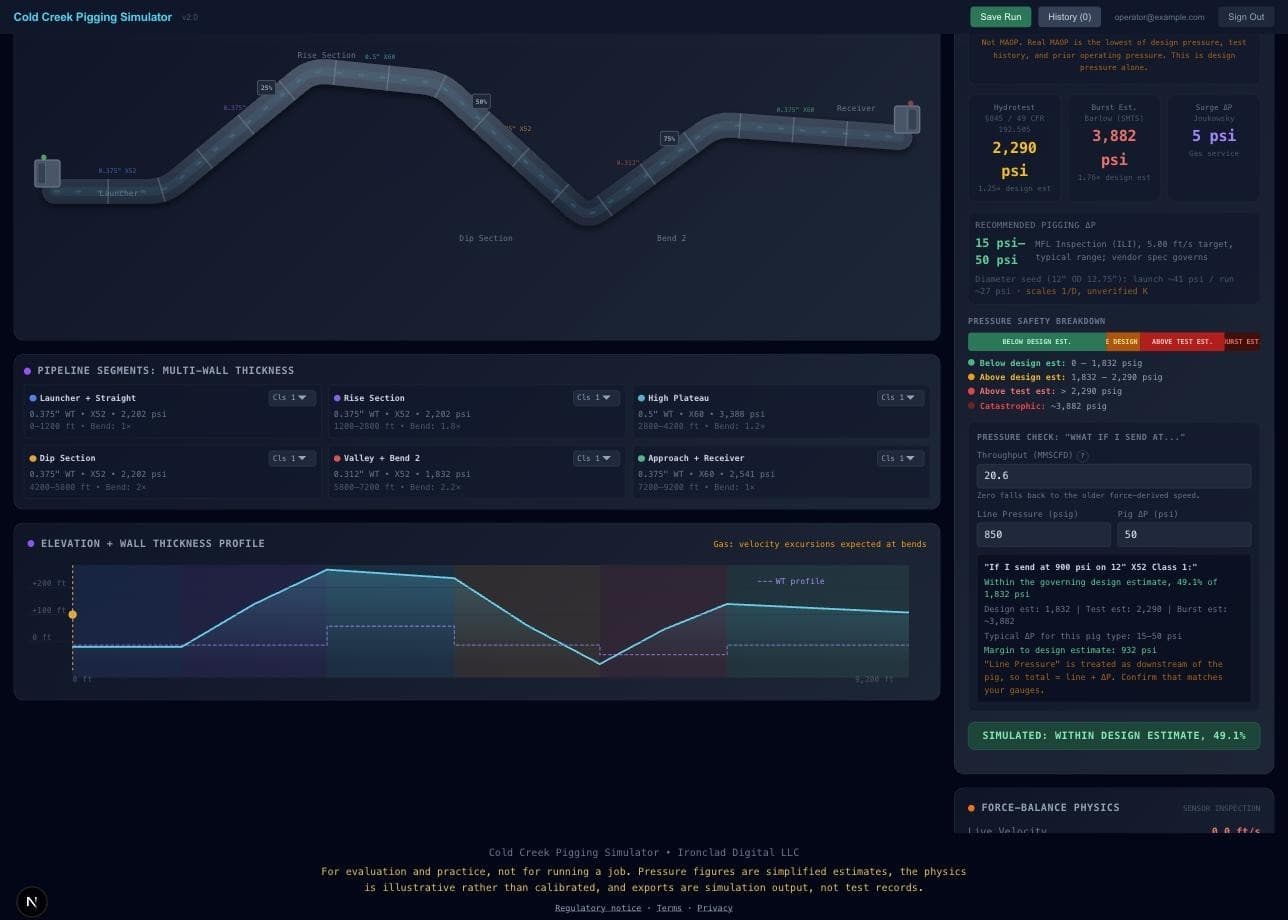
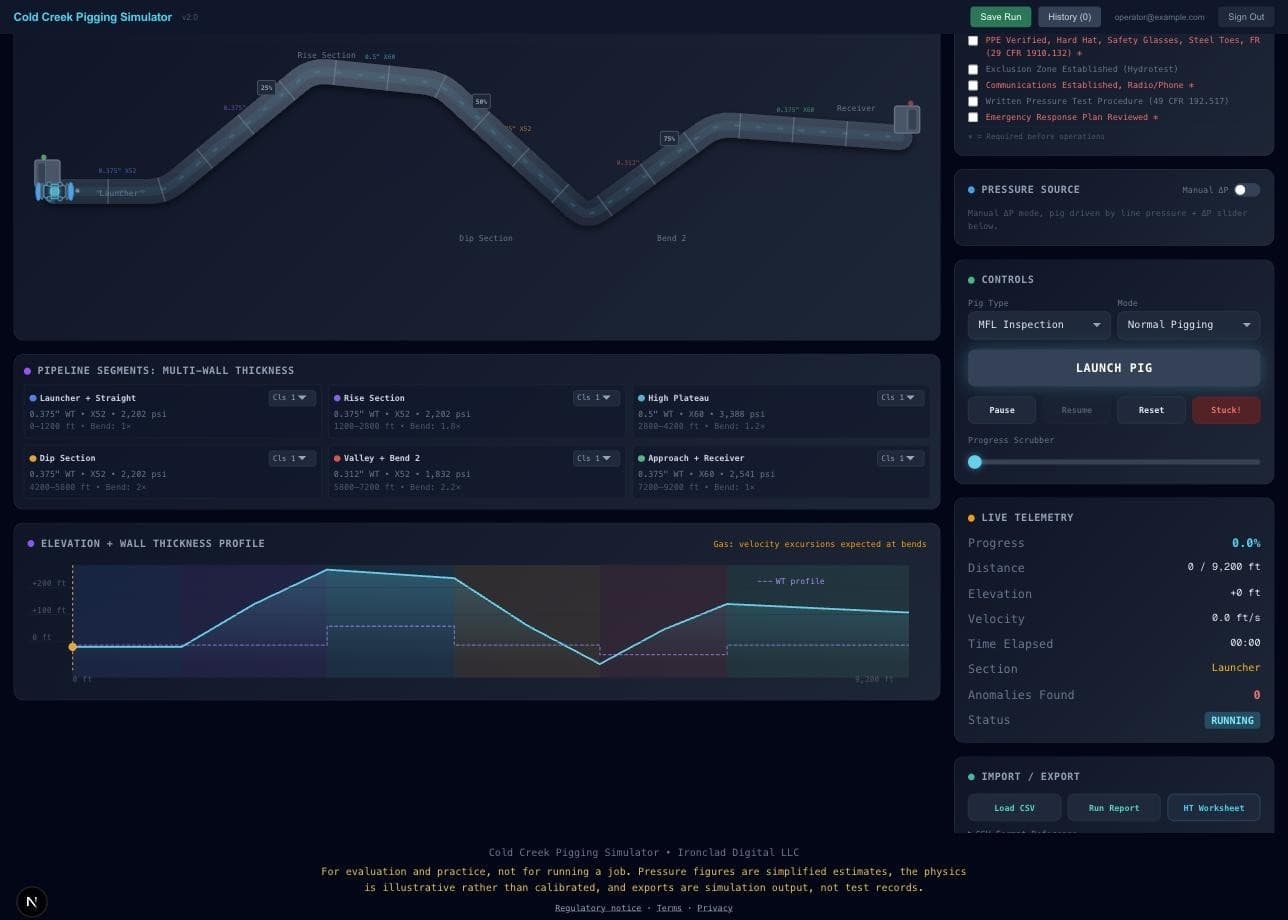
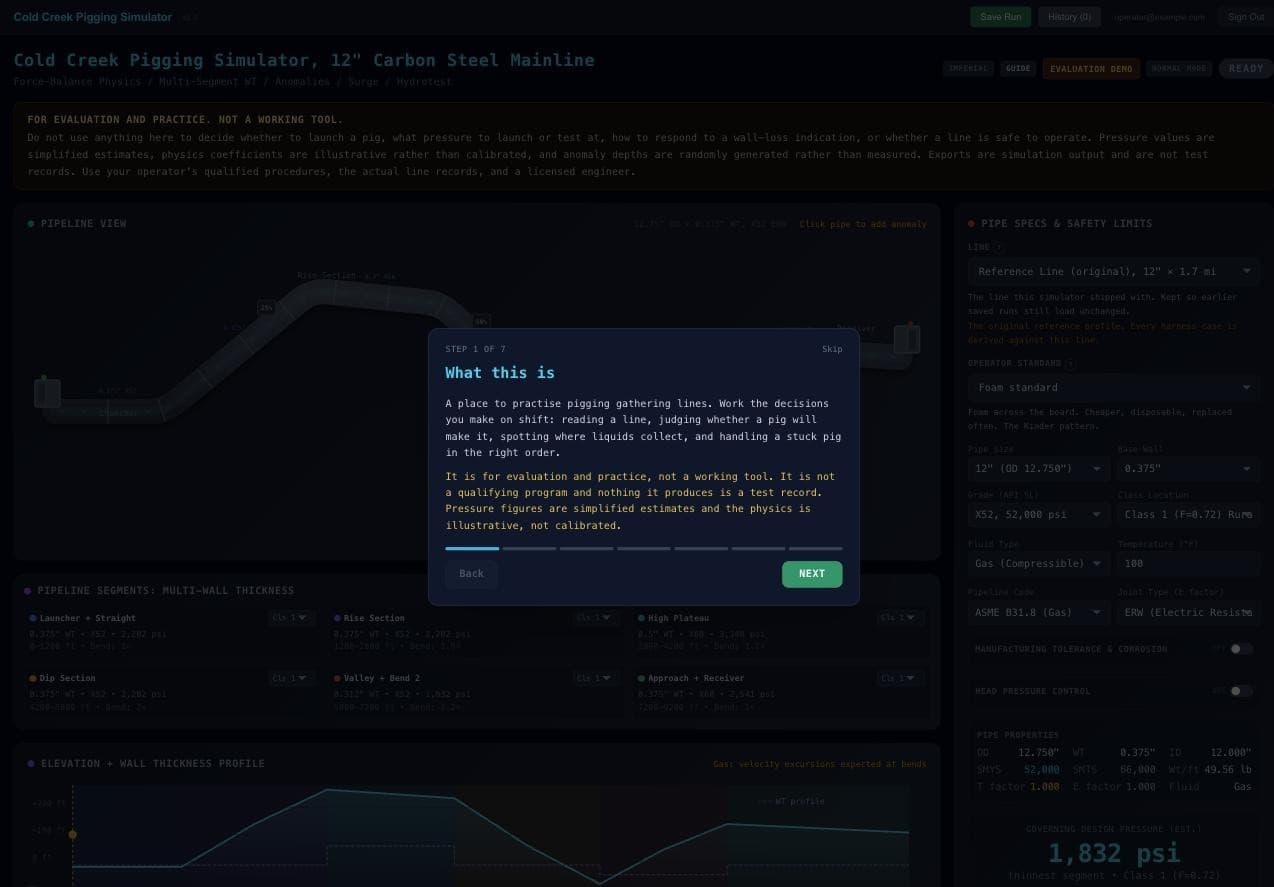
What the model lets you explore
Liquid movement
Explore how the model represents liquids accumulating in low spots and moving during a simulated run.
Scenario comparison
Change inputs and observe simulated pig movement and pressure response. These examples are not operating procedures for a real line.
Gathering topology
Model pads, laterals, a home run, compressor stations, and the route to the plant.
Illustrative pressures
Inspect the model's presets and estimates. Actual conditions and approved limits must come from the facility's engineering and operating procedures.
Who it is for
- Operators newer to gathering. The line is the teacher. Send a pig, watch where the liquid goes, find out what a sag does to it without a truck roll.
- Anyone training a crew. A place to argue about a stuck pig where the wrong answer costs nothing. Compare scenarios and discuss the limitations of the model.
- Teams evaluating simulation. Look at it before deciding whether this kind of tool is worth having. That is what it is for right now.
What it is not for
- Planning, scheduling or justifying a real pig run.
- Setting a test pressure, or deciding whether to repair or defer.
- Satisfying Operator Qualification, PSM or RMP requirements.
- Producing a record. Nothing it exports is one.
The engineering shown is a worked example of a published method applied to a line you made up. Design pressure is not MAOP, which under 49 CFR 192.619 is the lowest of design pressure, test-pressure history and prior operating pressure; this computes the first of those and says so on screen. Remaining strength is a B31G worked example, not a fitness-for-service determination. Where a coefficient came from published work the repository names the source, and where it did not, the repository says that too.
Built by someone who ran the lines
Five years in the field and ten in the plant, and it is the field half that this one comes from. Gathering is where the pigs actually run; the plant is mostly the receiving end. That experience shapes the scenarios. Real work still requires approved facility procedures and qualified supervision.
Tell us who you are and what you would use it for. We read them.